Background Noise, Foreground Calm: The Games We Play Without Really Playing

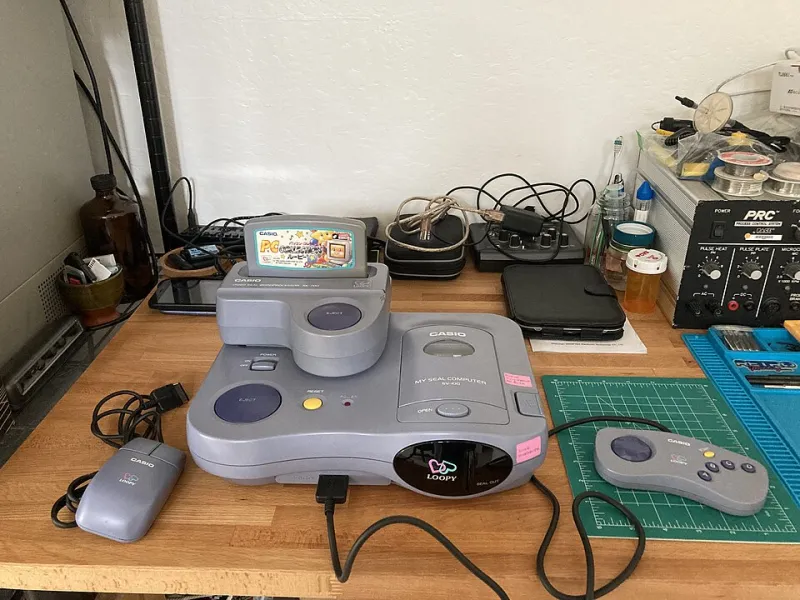
Photo: Credit Line: AIP Emilio Segrè Visual Archives, Gift of Bill Woodward, USNS Kane Collection, CC0, via Wikimedia Commons
There's a specific kind of evening a lot of us know pretty well. You've got a half-finished to-do list, a podcast you're only half-listening to, and somewhere on a second monitor — or maybe just a browser tab you keep minimizing and reopening — a game is running. Not demanding your attention, exactly. Just... there.
This is what you might call the background game phenomenon, and it's a lot more widespread than it probably sounds when you describe it out loud. Players across the US have quietly built routines around certain titles that function less like entertainment and more like mental wallpaper. Familiar enough to be soothing. Simple enough to not pull focus. Just engaging enough to keep idle hands busy.
So what's actually going on here, and why do some games nail this role so perfectly while others fall completely flat at it?
The Psychology of the Familiar Loop
Here's the thing about repetition: the brain kind of loves it, under the right conditions. When you already know a game's systems inside and out, you stop using the parts of your brain that handle problem-solving and start running on something closer to muscle memory. The cognitive load drops way down. And that lower-effort mental engagement can actually feel good — like a gentle hum that keeps your mind from wandering into stressful territory without demanding full concentration.
Psychologists sometimes talk about a state called "flow," where challenge and skill are perfectly matched. But there's a quieter cousin to flow that doesn't get as much attention: the comfort zone of the already-mastered task. When you've played a game hundreds of times, you're not in flow — you're in something softer. Less intense. More like the feeling of folding laundry you've folded a thousand times before.
That's what background gaming taps into. The novelty is gone, and that's exactly the point.
The Games That Do This Best
Not every game works as ambient entertainment. Fast-twitch action titles, story-heavy RPGs, anything with voice acting you actually want to follow — those demand presence. But a few specific genres have practically been engineered for the second-screen role, even if that was never the intention.
Clicker and idle games are the obvious entry point. Games like Cookie Clicker or the dozens of browser-based idle titles floating around the web are almost designed to be ignored. You check in, click a few things, watch numbers climb, and go back to whatever you were doing. The progression is slow and satisfying in a way that doesn't require you to witness every step.
Puzzle games with no stakes — think Tetris, Minesweeper, or the endless tile-matching games that populate every app store — hit differently when you've played them long enough. The mechanics are automatic. Your hands know what to do. Your brain gets just enough stimulation to stay out of anxious-thought territory without actually being challenged.
Management and city-building sims are a slightly heavier lift, but players who've logged serious hours in games like Stardew Valley or older titles like SimCity often describe running them during work-from-home days. The game ticks along, seasons change, crops grow — and you look up every ten minutes to make a small decision before returning to your spreadsheet.
Jordan, a graphic designer based in Austin, described their setup like this: "I've got a city builder I've been running for like two years. I'm not really playing it anymore. I just like watching it. It's weirdly calming to see all the little people going about their day while I'm on calls."
That sentiment comes up a lot when you talk to people about this habit.
Housework, Scrolling, and the Multi-Task Stack
The background game fits into a broader pattern of layered media consumption that's become totally normal in American daily life. We watch TV while scrolling our phones. We listen to podcasts while driving. We have music on while cooking. Adding a low-demand game into that stack isn't really a stretch — it's just another layer.
What's interesting is which layer the game occupies. For a lot of people, it sits below the main task but above pure background noise. It's something to return to. Something that gives you a small reward — a level completed, a resource collected, a puzzle solved — without asking for your sustained focus.
Mia, a teacher in Ohio who keeps a browser puzzle game open during her evenings, put it simply: "After a full day of being 'on,' I don't want to just sit and do nothing, but I also can't watch something that requires paying attention. The game is like... medium. It's the right amount of something."
That idea of "the right amount of something" is probably the most honest description of what background gaming provides.
The Repetition Is the Feature
It's worth pushing back a little on the idea that returning to the same game over and over is somehow a lesser form of engagement. There's a cultural tendency to frame novelty as the goal — always the next game, the new release, the fresh experience. But for a meaningful portion of players, the opposite is true. The worn-in feeling of a game you've played to death is exactly what makes it useful.
Think about how people relate to comfort food, or a playlist they've heard a hundred times, or a TV show they rewatch every few years. Familiarity isn't a failure of imagination. It's a resource.
Background games function the same way. They're reliable. Predictable. They don't surprise you at the wrong moment or demand more than you have to give. In a media landscape that's constantly competing for your full, undivided attention, there's something genuinely rare about a game that's okay with being ignored half the time.
Finding Your Background Game
If you haven't already stumbled into a background game of your own, it's worth thinking about what conditions would work for you. The best candidates tend to be games you already know well — not something new — with low time-pressure mechanics, forgiving save systems, and a visual style that's pleasant without being distracting.
Browser games, honestly, are a great place to look. The format naturally lends itself to low-commitment play, and there are decades' worth of idle games, puzzles, and casual management titles sitting in corners of the web, waiting to become someone's ambient companion.
PixelHaven has always had a soft spot for that kind of game — the one that doesn't ask too much, fits quietly into your day, and somehow ends up being exactly what you needed without you ever really deciding you needed it.
Sometimes the best gaming experience is the one you're barely paying attention to.