Rewind, Reset, Repeat: The Secret Comfort of Games That Let You Take It All Back
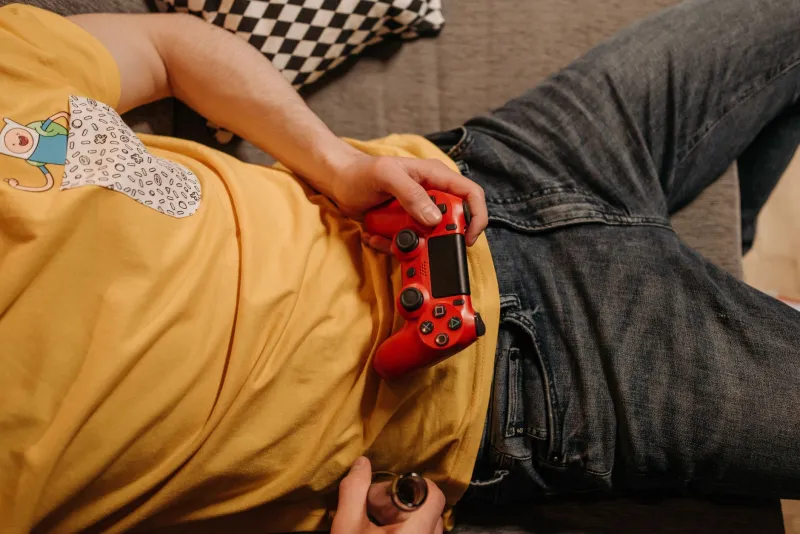
Somewhere between your third failed heist attempt in a tactics game and your fourteenth reloaded save in a narrative RPG, something quietly shifts. You stop feeling like you're cheating. You start feeling like you're breathing.
That's not nothing. That's actually kind of the whole point.
Games with generous undo mechanics, free-roaming rewind functions, or basically unlimited save-scumming potential have a reputation in certain circles. Hardcore players sometimes sneer at them. Forum threads get spicy when someone admits they reloaded a save because a beloved side character died in a cutscene. But underneath all that gatekeeping noise is a much more interesting question: why does having the option to undo feel so profoundly good, even when you don't use it?
The Weight We Carry Into the Controller
Here's the thing about living in 2024 America: consequences are relentless and they compound fast. Miss a bill, wreck your credit. Say the wrong thing at work, watch it echo for months. Make a medical decision without enough information, deal with the fallout for years. Real life doesn't have a rewind button, and most of us are acutely, exhaustingly aware of that fact.
So when a game—whether it's a cozy farming sim, a turn-based strategy title, or a branching visual novel—quietly hands you a Ctrl+Z option, something in your nervous system unclenches. It's not about laziness. It's about permission. Permission to try the weird dialogue option. Permission to take the risky move in battle. Permission to just see what happens without betting your entire playthrough on the outcome.
Psychologists who study play behavior have noted for years that low-stakes environments are where people actually experiment and learn. When failure is permanent and punishing, most players don't get braver—they get more conservative. They retreat to safe, predictable strategies. But when you can undo? Suddenly you're doing things you'd never risk otherwise. You're playing the game more fully.
Save-Scumming Isn't Cheating. It's Editing.
Let's talk about save-scumming specifically, because it gets unfairly maligned. For the uninitiated: save-scumming is the practice of saving your game right before a risky moment, seeing how it plays out, and reloading if you don't like the result. Repeat until satisfied.
Critics call it cheating. But cheating implies you're breaking rules in a competitive context where other players are affected. Single-player save-scumming affects nobody but yourself. What it actually resembles, more than anything, is editing.
Writers don't publish their first drafts. Photographers take forty shots to find one great one. Musicians record takes until the performance feels right. Save-scumming is just iterative creative process applied to interactive storytelling. You're not breaking the game—you're authoring your own version of it.
Some developers have started acknowledging this openly. Games like Into the Breach built rewind mechanics directly into their core design, framing it as a narrative device rather than a difficulty crutch. Baba Is You practically demands that players break and rebuild rules constantly. The undo button isn't a concession to weakness. In the right hands, it's a design philosophy.
The Anxiety Angle Nobody Talks About
There's a quieter dimension to all this that doesn't get enough airtime: the relationship between undo mechanics and anxiety.
For players who deal with decision paralysis, perfectionism, or generalized anxiety, games with rigid, permanent consequences can stop being fun almost immediately. Not because those players are bad at games—often they're quite skilled—but because the cognitive load of every irreversible choice becomes genuinely distressing. The fun evaporates. What's left is just stress with better graphics.
Games that allow rewinds or generous saving essentially create a pressure valve. The stakes feel real enough to make choices meaningful, but the knowledge that a mistake won't permanently ruin your experience keeps the anxiety from spiking into the red. It's a calibration that rigid difficulty systems simply can't offer.
This is part of why accessibility conversations in gaming have started including difficulty options and save flexibility alongside the more obvious stuff like colorblind modes and subtitle settings. The ability to undo isn't just comfort—for some players, it's the difference between being able to engage with a game at all or putting it down forever.
When the Option Matters More Than the Use
Here's a genuinely strange thing that players report over and over: sometimes just knowing you can undo something makes you less likely to need to.
It sounds counterintuitive. But think about how you behave in a low-pressure situation versus a high-stakes one. When you're relaxed, you make clearer decisions. When you're panicked, you make worse ones. Games that offer generous undo options effectively reduce the panic response, which means players often end up making better, more confident choices—and reloading less frequently than you'd expect.
The undo button is, in this sense, a psychological safety net that changes how you walk the tightrope. Not by making the tightrope lower, but by making you less afraid of the height.
The Broader Thing This Reflects
It would be easy to frame all of this as escapism, and sure, there's an element of that. But calling it pure escapism misses something more honest about what players are actually seeking.
We don't just want to escape consequences. We want to practice living without the fear of permanent consequences. We want to rehearse decision-making in environments that are forgiving enough to let us actually learn. We want, on some level, the experience of a world where trying something and failing doesn't mean you're finished.
That's not avoidance. That's a completely reasonable thing to want, given how unforgiving most real systems are.
Games that offer undo mechanics aren't coddling anyone. They're offering something the outside world is pretty stingy with: genuine second chances. The ability to look at a mistake, understand it, and try again with that knowledge intact. That's not weakness. That's how learning is supposed to work.
So Keep Reloading. Seriously.
If you're the kind of player who saves constantly, rewinds freely, or reloads until your favorite character survives the chapter—you don't owe anyone an apology. You're not playing the game wrong. You're playing it in the way that actually works for your brain, your mood, your evening.
PixelHaven has always had a soft spot for the odd, the overlooked, and the misunderstood corners of gaming culture. And the culture around undo mechanics is exactly that: misunderstood. What looks like a crutch from the outside is often, up close, something closer to a coping mechanism, a creative tool, and occasionally a small act of self-care disguised as pressing F5.
The real world doesn't have a rewind button. That's exactly why it matters that some of our games do.